
Gasoline
When I turned 14, a friend gave me a gift that made a lasting impact on my life. Corey Graft, founder of Midships, handed me a small present that his mom probably wrapped for him—Deborah was always crafty—and watched me open it.
Inside were two CDs: Alien Youth by Skillet and The Hammering Process by Living Sacrifice. Alien Youth had been released about a month before my birthday, and I was dying to get my hands on it. The other CD was a surprise. Corey explained how he’d chosen it:
“I walked into Christian Armory and asked them for the heaviest album they had,” he said.
As I write this, I’m transported back to the moment I first fired up Alien Youth on my dad’s stereo. Right now, I’m listening to that same album through a pair of speakers another friend recently gave me—the same kind my dad had. The experience is a bit surreal.
Corey gave me something I wanted, but he also gave me something I needed. That second gift came through The Hammering Process. At the time, I had just begun discovering heavy metal, largely through RadioU and its Friday night show, “RadioU LOUD,” which featured some of the heaviest music in the Christian scene. If you think Christian music can’t hit hard, I’d encourage you to listen to “5 Year Winter” by Zao.
When I was a teenager, most adults—including my parents—saw my affinity for heavy metal as a sign of rebellion. As a parent myself, I understand their perspective a little better now. But they missed something essential about what drew me to heavy metal—and what still draws me to it.
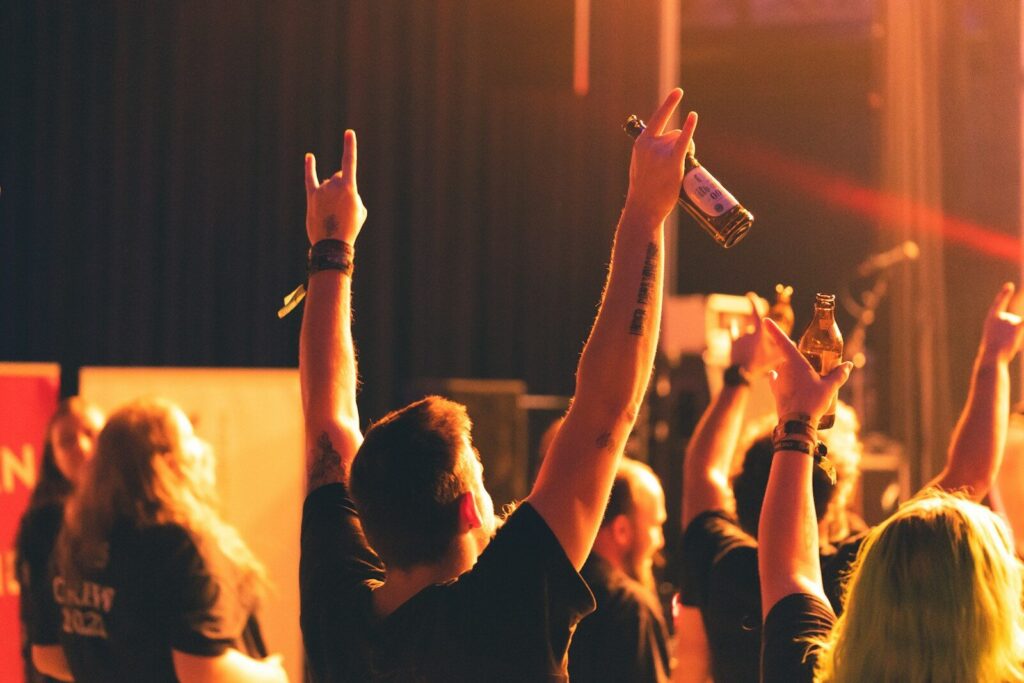
Heavy metal gives sound to emotions that can be difficult to put into words. It expresses them eloquently through the instruments, the vocals, and the sheer force of the music.
Have you ever had a day when you wanted to break stuff? Limp Bizkit has a song for you.
Have you ever felt like you were coming undone? Korn has a song for you.
Have you ever just wanted to scream, “F*ck it!”? Marilyn Manson has a song for you.
Have you ever felt like tossing a match at the world and watching it all burn? I Prevail has a song for you.
You don’t have to like heavy metal to understand those feelings. I think plenty of people experience them in their everyday lives, even people who generally consider themselves stable and happy.
Over the past few weeks, I’ve been learning “Gasoline” on guitar, a song by a band I recently discovered: I Prevail. The first time I heard it, I knew I wanted to play it. So I started practicing. Bar by bar, I’ve gotten better, and now I have it nearly memorized. Whenever I play it on my electric guitar, I feel an incredible sense of release and raw energy. On difficult days or nights, I grab my guitar, crank the amp, and play until the walls shake.
Tonight, I watched the music video, and it hit me hard.
You don’t have to be a heavy metal fan to empathize with the child in the video. I think many people will recognize something of their own experiences in his story: painful things that happened in childhood and left scars they still carry as adults.
In the video, a young boy wakes up and discovers his father cheating on his mom with his babysitter. When his father catches him, he beats the shit out of him. The abuse continues as the boy grows up. Eventually, as an adult, he confronts his father and takes revenge on the man who scarred his life.
As someone who grew up in the church, I can understand how a disconnect develops between people whose lives have been relatively sheltered and those who have experienced profound trauma. It’s easier to tell someone to “cast their cares on the Lord” when the heaviest burden you’ve known is getting picked on at youth group for wearing a dorky outfit. For the record, that was me.
What understanding of God do you offer someone who has experienced severe childhood trauma? How do you explain God’s love to someone whose dad beat them as a child? What is a child with black eyes supposed to do with the instruction to “let it go” (Newsboys)?
For some people who have experienced violence, an intense physical or creative outlet can offer a way to express feelings they don’t yet know how to talk about. I’ve sometimes thought of it as “healthy violence”: a way to give pain somewhere to go without hurting yourself or anyone else.
For me, it’s shooting my AR-15 at a target at the gun range.
For me, it was riding my motorcycle, opening the throttle, and hearing the pipes scream.
For me, it’s lifting heavy weights and feeling my muscles strain through each repetition.
For me, it’s picking up a can of spray paint and watching the color splatter onto a canvas.
For me, it’s cranking my amp until I can feel the guitar riffs beat against my chest as I play.
I’ve begun to understand—and appreciate—that healing looks different for everyone. For some, it means going to a spa and getting a massage. For others, it means picking up tools and working in the garage while they sweat bullets.
In many ways, the life of Jesus has been watered down to a tidy, prescriptive narrative that feels distant from the lives many people actually lead. We picture “gentle Jesus, meek and mild,” but lose sight of His humanity: the betrayal, humiliation, brutality, and agony He endured.
For those who have experienced unimaginable pain, abuse, and hurt, I don’t think Jesus would limit His response to a prescription for morning coffee and Bible reading. I can imagine Him handing someone an electric guitar and telling them to play their heart out—to give sound to the pain, the memories, and everything they’ve carried in silence.
No Comments