
Memorial
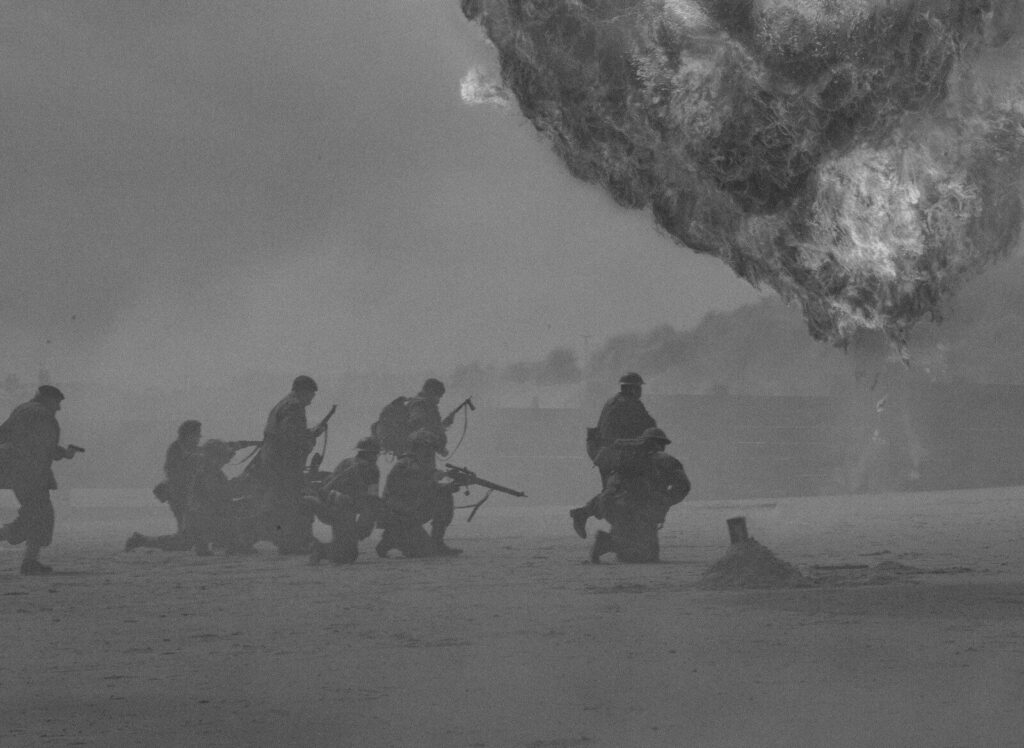
In our comfortable, modern times it’s difficult to imagine real hardship or catastrophe. For many of us, the most concerning event to happen in our day-to-day life is a mishap at Starbucks where the barista uses coconut milk rather than almond in our grande latte as we navigate on paved highways in cars with working air conditioning and streaming music services.
Many of us have never known true hardship or difficulty. I recently spoke to a friend of mine who voiced concern that a potential love interest was taking too long to text back. I encouraged them to think about how people ‘used’ to communicate during the days of letters and landline phones; communication took days, weeks and even months to occur.
During WWII, there were certain types of military operations/roles where the life expectancy of its participants was counted in minutes. For the first men to land on the beaches of Normandy during D-Day, death was almost certain as soon as the armored door of the transport ship fell into the cold Atlantic water; mowed down by heavy machine gun fire that ripped apart the bodies of the soldiers before they stepped foot onto land.
That morning, the soliders were fed enormous breakfasts – with military brass knowing that it would be the last meal for many of them. Eggs, bacon, sausage and coffee were given out generously – a huge mistake, as most of the men got seasick on the transport boats to Normandy’s beaches; violently vomiting all over each other, while packed as tight as sardines in the heavy metal boats.
Many of these young men were ordinary civilians only a year prior; living in small-town America, with the ink from their senior yearbook photos still drying. These weren’t hardened warriors; they were young men that went through a short boot camp before donning a helmet and a rifle to leave their homeland to fight a war they didn’t fully understand.
The casualties that day were enormous – on both sides of the proverbial fence. Over 57,000 U.S. solidiers landed on Normandy via sea transport, with another 15,000 airborne troops falling from the skies in a parachute, or on a glider. Hidden deep inside concrete bunkers on the beach were Gernan soldiers – which some have recounted to be as young as 16-18, due to a shortage of men.
Both sides must have looked at the other side and thought one thing:
“My God.”
That sort of terror is something I can only conceptually fathom, as I write this entry while resting on a Tempurpedic bed in an air-conditioned house while a white noise generator runs in the background.
For the men who were to fight the battle of Normandy, they faced uncertain odds – and even if they survived, they would never, ever forget the horrors they witnessed that day for the rest of their lives.
They must have thought a lot about their lives as the hours counted down to the morning of D-Day. I certainly would have. I would have thought about all of the things I’d done, wished I had done and hoped to do if I were to come out of the fight alive.
How different would their lives have been if they had been notified 2-3 years prior that their fate would land them on the beaches of Normandy? That’s a question worth asking.
Would they kiss their loved ones at night any differently?
Would they have guarded their time better?
Would they have done everything possible to leave behind a legacy?
Life is a precious thing, and the seconds we’re given to live often fail to feel as temporary and short-lived as they actually are. To the men riding the transport boats onto the beaches of Normandy – and to the men in bunkers waiting to greet them, their sense of time must have felt drastically different than our own.
However, our own time isn’t much different than theirs. Some of us may live well into our elder years, while others see their lies cut short. In both cases, the amount of time we’re given on this plane[t] seems to be a small pebble drop in the ocean of eternity.
This evening, Atlas and I checked out at Lowes. In front of us was an elderly man who joked with the cashier “I wish there were a few 20 year-olds to help me plant all of this.” before remindering her to apply his military discount. I noticed that he wore a hat bearing the name of a Naval base.
As I paid, I noticed the man slowly walking his heavy-laden cart to the parking lot. We quickly caught up to him and as I walked alongside him in the parking lot, I asked if I could help him load his car. He politely declined, but I pressed him.
“Sir, I saw your hat and this is the way that I wanted to say ‘thank you'”
He obliged.
As I loaded up his car, I mentioned to him that Opa was a pilot, sharing with him that he flew over 300 missions.
“300!” he responded. “Did you know that U.S. bombers were considered a ‘veteran’ after only 25? Their life expectancy was measured in minutes….
…how many times did he get shot down” he asked.
“Twice.”
“That must have been one tough SOB.”
We continue to chat and I sincerely thanked him for his service. As we wrapped up, he asked me:
“Do you know why we did it? Why we went to war?”
“No. Why?”
“We did it for you.” he said, as he pointed to me and Atlas.
His words really sunk in as Atlas and I walked back to our car. I thought about the rich treasure that he and I have as we fill each day we have with rich memories, adventures and safety. While the days are packed with loving moments, I remember that nothing is promised and we should live each moment as if it were a treasure chest waiting to be opened.
In life, so much of our time is spent waiting for the next moment. However, it’s so rare that we stop to look at the grand spectacle of our lives and truly meditate that we are somewhere in the middle of birth and death. Every second counts and can’t be replaced once it’s been spent.
No Comments